• Español Familias
Youth First
  • About
    • Who We Are
      • Mission, Vision & Values
      • Outcomes & Impact
      • Stories of Change
      • History
      • Staff
      • Youth First Mental Health Professionals
      • Board of Directors
      • Leading Sponsors
      • Careers
    • Where We Are
      • Catholic Diocese of Evansville
      • Daviess
      • Dubois
      • Gibson
      • Greene
      • Knox
      • Lawrence
      • Martin
      • Morgan
      • Orange
      • Perry
      • Posey
      • Spencer
      • Vanderburgh
      • Warrick
  • Programs
    • For Schools & Students
      • Youth First Mental Health Professionals
      • Al’s Pals
      • C.A.S.T.
      • LifeSkills Training
      • Reconnecting Youth
      • Teen Series
      • Tween Series
      • WhyTry
    • For Families & Youth
      • Camp Memories
      • Family First
      • Family First Foundations
      • In It to Win It
    • For Communities
      • Talk – They Hear You
      • The Truth Is
  • Resources
    • Resiliency Resources
    • Advice from Our Professionals
    • Other Helpful Resources
  • News
    • Newsletter
    • News Releases
  • Events
    • Calendar of Events/Programs
    • Youth First Warrick County Golf Scramble
    • Youth First Breakfast of Champions
    • Youth First Benefit Auction
  • Careers
  • Contact
  • Support
    • Donate
    • Volunteer
  • Click to open the search input field Click to open the search input field Search
  • Menu Menu
  • Link to Facebook
  • Link to Instagram
  • Link to Youtube
  • Link to LinkedIn

Kids Benefit When We Ring in the New Year with Self-Care

All Posts, Counties, Youth First Blog

By Camryn Cater, MSW, LSW – December 31, 2025 –

When traveling by plane, we always hear the flight attendants say, “In an emergency, put the oxygen mask on yourself before putting it on your child.” This is to ensure the adult’s safety so they can take care of the child accompanying them.

Parents tend to instinctively put their child’s well-being ahead of their own. But what happens when a parent does not take care of themselves first?

Stress is an emotional response to the demands of life, such as bills, school, work, caring for children, and all the additional curveballs life throws our way. Stress affects everyone differently, and it’s important to remember that not all stress is bad. However, long-term stress can negatively affect your health as well as the health of your children.

The number one stress-related mental health diagnosis is anxiety. Parental stress causes increased behavioral issues in children and can lead to poor performance in school. It can also result in children using less expressive language, exhibiting poor social skills, experiencing more mental health struggles, and having a more difficult time coping with change.

During my time as a Youth First Mental Health Professional, I have noticed that the behaviors of parents and guardians struggling with large amounts of stress are often mirrored by their children. For example, when parents are experiencing depression or undergoing tough times, their children may experience lack of motivation in school, poor grades, and often appear more tired. Some parents experiencing anxiety have children with anxious behaviors, such as lack of control over emotions, lack of sleep, and frequent stomach aches.

Understanding your stressors and prioritizing self-care can help create a better environment and a healthier lifestyle for you and your child. Practicing and teaching your child effective self-care is very important as they grow and mature. Children absorb and learn from your habits.

Parents and guardians can help their child overcome stress by modeling positive habits. Examples of self-care include exercising, taking a relaxing shower or bath, finding a new hobby, prioritizing sleep, replacing negative self-talk with positive self-talk, and reaching out for support when needed.

Help your child identify their emotions and let them know it’s okay to feel the way they do. This allows them to learn healthy ways to react to those emotions when they arise. Topics children find stressful may seem trivial when compared to our adult stressors, but acknowledging a child’s stress is important for the child to feel heard and understood.

In the happiest of our childhood memories, our parents were happy too! Putting yourself first as a parent is not as selfish as it sounds. Committing to habits of self-care can create better well-being for yourself and a positive future for your child.


December 23, 2025/by Youth First
https://youthfirstinc.org/wp-content/uploads/2025/12/Happy-New-Year-scaled.jpg 1707 2560 Youth First https://youthfirstinc.org/wp-content/uploads/2017/06/340x156_YouthFirst_logo_color-300x138.png Youth First2025-12-23 09:42:102025-12-23 09:42:11Kids Benefit When We Ring in the New Year with Self-Care

Make Time to Connect with Your Child

All Posts, Counties, Youth First Blog

By Hannah Smith-Quirey, MSW, LCSW – December 22, 2025 –

When it comes to parenting, connection is essential. A strong bond helps your child feel loved, valued, seen, and heard. This doesn’t mean challenges and disagreements won’t arise – those moments are a normal part of any relationship. However, when a solid connection is in place, navigating difficulties together becomes easier and strengthens your relationship even more.  

Connection can feel challenging in today’s fast-paced world. Setting aside just 10-15 minutes each day to focus on your child – doing something they enjoy and simply being together – can make a meaningful difference. You can also nurture connection during everyday routines, such as getting ready for school, bedtime, cooking dinner, or car rides to and from activities. These ordinary moments often create the strongest bonds.

There are so many ways to build a strong connection with your child. Laughing and playing together helps both you and your child release the everyday worries and stresses of the day. These moments don’t need to be structured – let your child choose the activity and take turns leading. Whether it’s a game, a creative project, or simple play, following your child’s lead shows them they are valued and strengthens your bond.  

You can also strengthen your bond through physical connection, such as hugs or bedtime snuggles. Make the most of small moments – like brief conversations at bedtime or while riding in the car – to check in and connect. Be open and accept your child’s feelings and emotions. Big feelings can be overwhelming at times, but children need a safe space to express them. Welcome the emotions that may be hiding beneath anger or challenging behavior. Focus on listening and showing empathy rather than trying to fix the feeling. Simple responses like, “I hear that you feel sad about…,” “Tell me more about that…,” or “That sounds like it would be hard,” can go a long way in helping your child feel understood.  

Technology can sometimes stand in the way of connecting with our children. By slowing down, putting aside your phone, turning off the television, and truly listening, you can make space to be fully present. These small, intentional choices can open the door to powerful moments of connection.  

Connection matters. This isn’t meant to create guilt, but to invite us to be more intentional about being present with our children. While scheduling time to connect is valuable, some of the most meaningful moments happen spontaneously – when we pause, notice and engage in the everyday moments we already share.  

December 22, 2025/by Youth First
https://youthfirstinc.org/wp-content/uploads/2025/12/Mother-reading-to-child-scaled.jpg 1707 2560 Youth First https://youthfirstinc.org/wp-content/uploads/2017/06/340x156_YouthFirst_logo_color-300x138.png Youth First2025-12-22 14:18:252025-12-22 14:18:28Make Time to Connect with Your Child

Holiday Stress and Your Anxious Child

All Posts, Counties, Youth First Blog

By Brooke Skipper, MSW, LCSW – December 17, 2025 –

It’s that time of year: no school, sweet treats, presents, and parties…You might think this is every kid’s dream! If you have a child with anxiety, however, you know this combination can be a huge trigger.

While a long school vacation might feel like a relief for many kids, the break in routine can be difficult for those with anxiety. The parties, loud noises, and bright lights can create sensory overload for anxious kids.

For children who struggle with social anxiety or who are simply more introverted, the constant activity and socializing can be very overwhelming. To minimize meltdowns, tantrums, and stress for the whole family, work on coping ahead of time by employing some simple strategies.

  1. Identify the warning signs. Talk with your child about how their body feels when they are anxious. Are they experiencing sweating, a racing heart, or butterflies in their stomach? Pay attention to your child’s behavior during anxious times. Some warning signs may be:

    a. Excessive tears or clinging to parents
    b. Isolating
    c. Psychosomatic complaints (headaches, stomach aches, random pains that cannot be explained)
    • Create coping strategies. Once you and your child understand the warning signs, know what to do to decrease anxiety before it spirals. The more a child practices these coping skills, the better they will become. Make sure your child’s favorite coping tools go with you to events and outings. Some easy skills to try are:

      • Journaling
      • Music
      • Art expression
      • Exercise
      • Deep breathing
      • Fidgets or stress balls
    • Set expectations. Let your child know the schedule for the day. Describe the events you will be attending, who will be there, and what your child may enjoy while there. This helps your child feel more in control and less anxious.
    • Make time to reconnect. With the holidays full of busy schedules and lots of family and friends, it can be hard to have meaningful one-on-one time with your child. An anxious kid craves that slow-paced rest and relaxation time spent with you as their safety net. Find time to recharge with your child each day, talk through how they are feeling, and identify any needs they have.

    Children thrive on routine. Finding ways to maintain some form of normalcy during this chaotic time can be extremely beneficial for an anxious child. Try to ensure your child gets plenty of restful sleep and eats nutritious meals, even if bedtimes and mealtimes shift to accommodate events.

    Remember, you are your child’s best advocate. If there is an event that just does not work for your family, it is ok to maintain boundaries and not attend.

    December 17, 2025/by Youth First
    https://youthfirstinc.org/wp-content/uploads/2025/12/Girl-journaling-by-Christmas-Tree-scaled.jpg 2560 1707 Youth First https://youthfirstinc.org/wp-content/uploads/2017/06/340x156_YouthFirst_logo_color-300x138.png Youth First2025-12-17 14:30:162025-12-17 14:38:02Holiday Stress and Your Anxious Child

    Ascension St. Vincent Evansville Awards $20,000 to Youth First

    All Posts, Counties, News Release, Youth First Blog

    Grant to Provide Mental Health Support and Substance Misuse Prevention for Youth in Evansville Catholic Diocese Schools

    [Evansville, IN] Youth First, Inc. is celebrating a $20,000 grant award from Ascension St. Vincent Evansville for Youth First mental health services and prevention programs in partner schools throughout the Catholic Diocese of Evansville.  

    The check presentation was hosted at Mater Dei High School to represent the 27 Youth First partner schools in the Catholic Diocese of Evansville. Youth First’s impactful work would not be possible without tremendous support from community partners like Ascension St. Vincent Evansville.

    Ascension’s mission of delivering compassionate, personalized care to all, with special attention to those most vulnerable, aligns with Youth First’s mission of strengthening youth and families by providing evidence-based programs that promote mental health, prevent substance misuse, and maximize student success.

    Alex Chang, Ascension President, South Region, says, “Ascension St. Vincent’s collaboration with Youth First strengthens the safety net around students in the Evansville Catholic Diocese. By supporting Youth First’s mental health services within the parochial schools, this partnership ensures that young people have the guidance, resources, and encouragement they need to thrive—academically, emotionally, and spiritually.”  

    The grant to Youth First will allow for continued mental health support for students in partner Catholic Diocese of Evansville schools. Across its service footprint, Youth First partners with 130 schools in 14 Indiana counties to embed substance misuse prevention programs and over 100 skilled mental health professionals (primarily master’s level social workers) in school buildings, where they provide caring mental health support for students and prevention coaching for parents and teachers. Youth First Mental Health Professionals build caring relationships, foster readiness for positive change, and boost resiliency, along with other valuable life skills.

    Youth First’s positive work and strategies are driving growth, with more schools seeking their valuable expertise to address the growing need for mental health support for students. As Mater Dei High School Principal Darin Knight says, “For the past 25 years, Mater Dei has been truly blessed by the support Youth First has provided our students. Valorie Dassel, LCSW, LCAC, has faithfully served as our Youth First Mental Health Professional, positively impacting hundreds—if not thousands—of students through her expertise and compassion. From mental health challenges to family struggles and substance abuse, she helps our students navigate real-world issues and develop the values and resilience they need for adulthood. We are deeply grateful to community partners like Ascension for recognizing the importance of these programs in our Catholic schools and continuing to support Youth First.”

    December 11, 2025/by Youth First
    https://youthfirstinc.org/wp-content/uploads/2026/02/Youth-First-Ascension-St-Vincent-Evansville-at-Mater-Dei-HS-check-presentation_Dec-2025-scaled.jpg 1707 2560 Youth First https://youthfirstinc.org/wp-content/uploads/2017/06/340x156_YouthFirst_logo_color-300x138.png Youth First2025-12-11 16:10:242026-02-10 16:16:32Ascension St. Vincent Evansville Awards $20,000 to Youth First

    How to Talk to Children About Their Friends’ Mental Health

    All Posts, Counties, Youth First Blog

    By Britney Wagler, MSW, LCSW – Dec. 11, 2025 –

    Our children often look to us for answers. Sometimes, when it comes to mental health, we don’t know what to say or how to support them.

    According to the 2024 KIDS COUNT Data Book, 35.7% of students in 7th-12th grade reported that in the past year, they felt so sad or hopeless for two or more weeks in a row that they stopped participating in their usual activities.

    Additionally, 17.2% reported that in the past year they seriously considered attempting suicide, and 12.8% reported that in the past year they made a suicide plan.

    If your child is not directly affected by mental health issues, one of their friends or someone they know likely is. Mental health is a tough topic to talk about; however, the more we talk about it, the easier it becomes. When a friend is struggling, your child may feel confused, helpless, or even guilty. They may not know what to say to their friend and may look to you for help.

    What can you say to your child to help support their friend? First, normalize mental health issues. Talking about mental health with your child can better educate them and provide them with important information. If you don’t know the answers, look up information from a reputable source together. Mental Health America (MHA) and the Substance Abuse and Mental Health Services Administration (SAMHSA) are great resources.

    Second, remind your child that their friend is still their friend. Just like your child wouldn’t stop being a friend to someone diagnosed with diabetes, your child shouldn’t stop being friends with someone who has a mental health diagnosis. Remind your child that their friend is still the same person they were before. They should continue to include them in all activities and plans.

    Third, encourage your child to check in on their friend. Give your child permission to come to you with any concerns they may have about their friend. Remind them that if anyone talks about suicide or self-harm, they should tell their parents or another trusted adult. Remember that a mental health disorder is not contagious. Your child will not “catch it” from someone else.

    Lastly, if your child’s friend does attempt to harm themselves in any way, remind your child that it is not their fault. It’s ok to be sad and scared about what happened, but they are not responsible for anyone else’s actions, only their own. Comfort them and extend that compassion to their friend. Children watch how you react and respond to crises. You set the tone on how they handle mental health issues with others in the future.

    If you or someone you know is thinking about suicide, please contact 988 for the local Suicide and Crisis Lifeline or 911 for emergency responders.

    December 11, 2025/by Youth First
    https://youthfirstinc.org/wp-content/uploads/2025/12/teen-helping-sad-friend-scaled.jpg 1707 2560 Youth First https://youthfirstinc.org/wp-content/uploads/2017/06/340x156_YouthFirst_logo_color-300x138.png Youth First2025-12-11 14:00:252025-12-11 14:00:27How to Talk to Children About Their Friends’ Mental Health

    How to Talk to Your Kids about Grief and Loss

    Talk They Hear You

    Talking to children about grief and loss can be challenging, but it’s an essential part of helping them process their emotions and understand difficult experiences. Whether it’s the death of a loved one, a pet, or another significant loss, children need guidance and support to navigate their feelings. This guide provides practical advice on how to approach these conversations with sensitivity and care. 

    1. Create a Safe and Open Environment

    Children need to feel safe and supported when discussing grief and loss. Choose a quiet, comfortable place for the conversation, free from distractions. Let your child know that it’s okay to feel a wide range of emotions and that there are no right or wrong feelings in grief. 

    – Tip: Encourage open communication by asking open-ended questions, such as, “How are you feeling?” or “What are you thinking about?” 

    1. Use Age-Appropriate Language

    It’s crucial to tailor your explanations to your child’s age and developmental level. Younger children may not fully grasp the concept of death and may need simpler explanations, while older children can handle more complex discussions. 

    – For Young Children (Preschool to Early Elementary): Use clear and simple language. Avoid euphemisms like “passed away” or “gone to sleep,” which can be confusing. Instead, explain that the person or pet’s body has stopped working and they won’t be coming back. 

    – For Older Children and Teens: You can provide more detailed explanations and discuss the emotional aspects of grief. Be honest about the situation and answer their questions to the best of your ability. 

    1. Be Honest and Direct

    Children appreciate honesty, and shielding them from the truth can lead to confusion and mistrust. Share accurate information in a compassionate way, acknowledging the sadness and difficulty of the situation. 

    – Tip: If you don’t have all the answers, it’s okay to admit it. You can say, “I don’t know why this happened, but we can talk about it and support each other.” 

    1. Encourage Expression of Emotions

    Let your child know that it’s normal to feel sad, angry, confused, or even relieved. Encourage them to express their emotions through talking, drawing, writing, or other creative outlets. Reassure them that all feelings are valid and that grieving is a personal process. 

    – Tip: Share your own feelings appropriately. For example, “I’m feeling very sad too, but it’s okay to feel that way. We can support each other.”  

    1. Provide Reassurance and Comfort

    Children may worry about their own safety or the safety of other loved ones after experiencing a loss. Reassure them about their well-being and the continuity of life. Maintain regular routines and offer physical comfort, like hugs, to provide stability. 

    – Tip: Let them know it’s okay to be happy and to continue enjoying their favorite activities. Grief can coexist with moments of joy. 

    1. Answer Questions and Be Patient

    Children may have many questions about death and loss, some of which may be repeated over time. Answer them honestly and patiently, even if they ask the same questions multiple times. This repetition helps them process the information. 

    – Tip: If your child asks difficult or unexpected questions, take a moment to gather your thoughts before responding. It’s okay to say, “That’s a good question. Let me think about how to explain it.” 

    1. Share Memories and Rituals

    Sharing positive memories and participating in rituals can help children process their grief and honor the memory of the person or pet they’ve lost. This might include looking at photos, telling stories, or creating a special memory book. 

    – Tip: Involve your child in memorial activities, such as lighting a candle or planting a tree, to provide a sense of closure and remembrance. 

    1. Seek Professional Support if Needed

    Some children may struggle with grief more intensely and may benefit from professional support, such as counseling or therapy. Look for signs of prolonged distress, such as changes in behavior, withdrawal, or difficulty in daily activities. 

    – Tip: If you’re concerned about your child’s well-being, consult with a mental health professional who specializes in children’s grief. 

    Talking to children about grief and loss requires sensitivity, honesty, and patience. By creating a supportive environment and providing age-appropriate information, you can help your child navigate this challenging experience. Remember that grief is a personal journey, and each child will process it in their own way. By being present and offering support, you can help them find comfort and healing. 

    December 10, 2025/by Youth First
    https://youthfirstinc.org/wp-content/uploads/2017/06/340x156_YouthFirst_logo_color-300x138.png 0 0 Youth First https://youthfirstinc.org/wp-content/uploads/2017/06/340x156_YouthFirst_logo_color-300x138.png Youth First2025-12-10 13:15:182026-01-12 11:04:43How to Talk to Your Kids about Grief and Loss

    From a Pen to a Boat: How a Local High School Senior Raised $2,000 for Youth First

    All Posts, Counties, Stories of Change, Youth First Blog

    By Julie Hoon, VP of Marketing & Communications – December 4, 2025 –

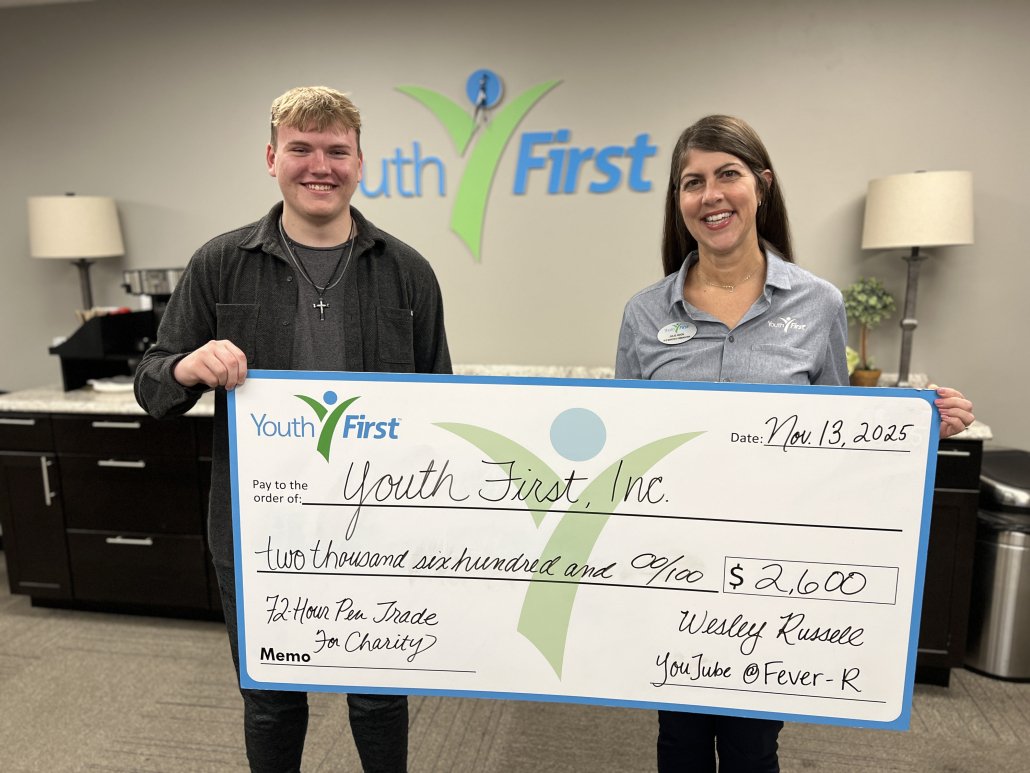
    Eighteen-year-old high school senior Wesley never expected that starting with a simple pen would lead to a $2,600 donation to Youth First. After launching a 72-hour challenge on his YouTube channel, he selected Youth First as the recipient of whatever funds he could raise through a creative trading mission. His effort quickly gained the attention of his family, friends, and his Youth First Mental Health Professional at Castle High School, Chasidy Lambert.

    “He’s a student with a vision!” Lambert said. “I don’t know many people who could turn a pen into a boat… just by asking! I’m so proud of the growth I’ve seen in him. He’s made big steps in connecting with people and in his demeanor and responsibilities. He pushes himself to maintain a healthier mindset and form healthy relationships. Seeing him use his skills to achieve a fundraiser like this for Youth First is amazing.”

    Wesley started his YouTube channel as a way to push himself beyond his social anxiety. Wanting to use the platform for something positive, he came up with the idea of trading a pen up to a high-value item, then donating the proceeds to a local nonprofit. To hold himself accountable, he set a 72-hour limit and created the challenge: “72-Hours to Trade a Pen for Charity.” With a friend filming, he committed to three days of trading, ending with whatever item he secured at the final deadline.

    On day one, Wesley made his first trade when a couple swapped his pen for a Mother’s Day decoration. That small success fueled a huge second trade: a propane grill. Although the ignitor didn’t work, the grill could still be lit manually.

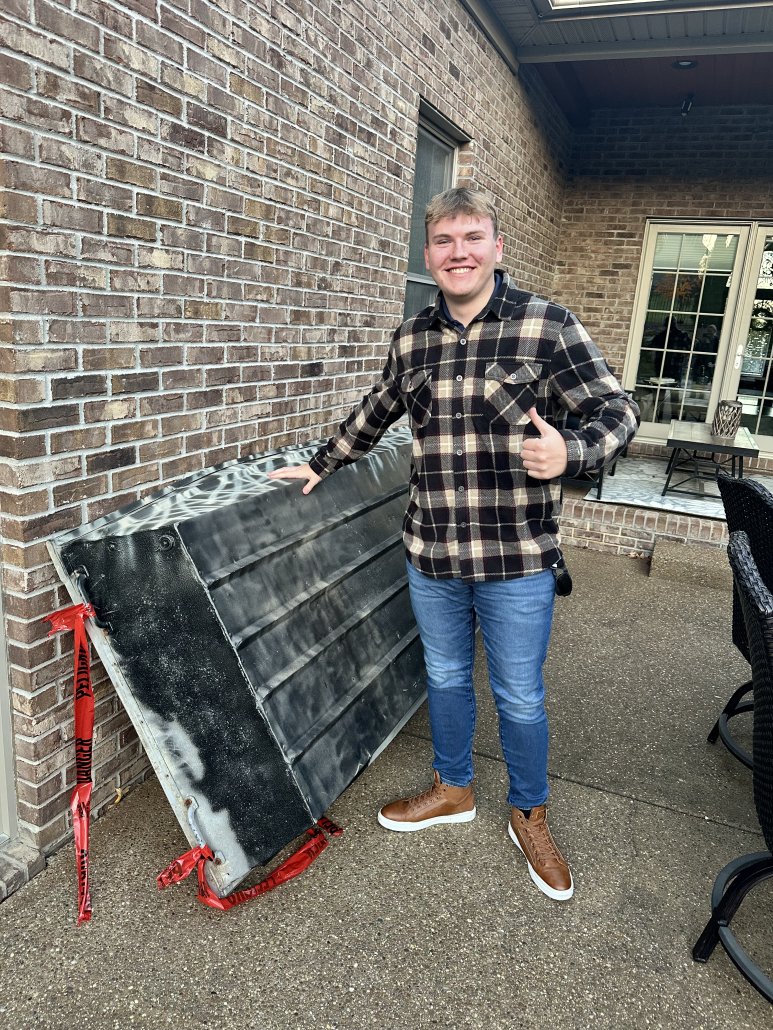
    Day two brought another surprising turn. An individual offered to trade a subwoofer and amplifier for the grill. By the end of the day, Wesley and his friend decided to broaden their reach, posting the available items on Facebook Marketplace and Snapchat. Their social media outreach paid off; by day three, Wesley received an offer to trade the subwoofer and amplifier for a 12-foot jon boat—a flat-bottomed, lightweight fishing boat. After securing a truck to transport it, the trade was finalized.

    Later that same day, Wesley found a buyer for the boat and announced that his chosen charity was Youth First. When the buyer learned the proceeds were being donated, he increased his offer to $1,500. Additional contributions from family and friends who followed the challenge brought Wesley’s total donation to an impressive $2,600.

    “I’ve never seen anything like this!” said Julie Hoon, Youth First’s Vice President of Marketing & Communications. “Our donors are incredible and come in all ages and stages of life, but not many can say they turned a pen into $2,000. Wesley’s heart is big, and I’m so impressed with his charitable mindset. I hope he motivates other young people to see how one idea can support a mission and make a substantial impact.”

    When asked why he chose Youth First, Wesley explained, “Other people need this money more than me. I wanted it to go to an organization that has helped me, and that’s Youth First. I want to make sure they’re always able to help students.”

    If you are inspired by Wesley’s story and would like to consider a donation to Youth First this holiday season, please visit our website at youthfirstinc.org/donate. Write “Wesley’s Story” in the comment box.

    To visit Wesley’s YouTube channel, Fever-R, and watch this story, click here: I Turned a Pen Into $2000 for Charity.

    December 4, 2025/by Youth First
    https://youthfirstinc.org/wp-content/uploads/2025/12/Wesley-Big-Check-Photo-2925-scaled.jpg 1920 2560 Youth First https://youthfirstinc.org/wp-content/uploads/2017/06/340x156_YouthFirst_logo_color-300x138.png Youth First2025-12-04 10:09:322025-12-04 11:30:12From a Pen to a Boat: How a Local High School Senior Raised $2,000 for Youth First
    Search Search

    Topics

    • Youth First to Honor Carol Lynch as 2026 Dr. William Wooten ChampionJuly 23, 2026 - 3:11 pm
    • How to Help Your Kids Make Good DecisionsJuly 22, 2026 - 2:22 pm
    • Youth First Receives $40,000 Award from CenterPoint Energy FoundationJuly 16, 2026 - 9:34 am
    • Establishing a Smooth Transition from Home to SchoolJuly 15, 2026 - 2:16 pm
    • Promoting Patience in a Fast-Moving WorldJuly 8, 2026 - 2:33 pm

    Support Youth First

    Help protect and heal the hearts of children by supporting Youth First!

    Donate

    Where to find us

    111 SE Third Street, Suite 405
    Evansville, IN 47708

    Mon–Fri: 8:00–5:00
    Sat–Sun: Closed

    Get In Touch

    812-421-8336

    Contact
    Copyright © 2026 Youth First, Inc. | Website by Media Mix
    • Website designed by Media Mix Advertising
    • Privacy Policy
    Scroll to top Scroll to top Scroll to top