Coping Strategies That are (Almost) Too Cool for School
By Holly Walther, MSW, LSW – August 19, 2026 –
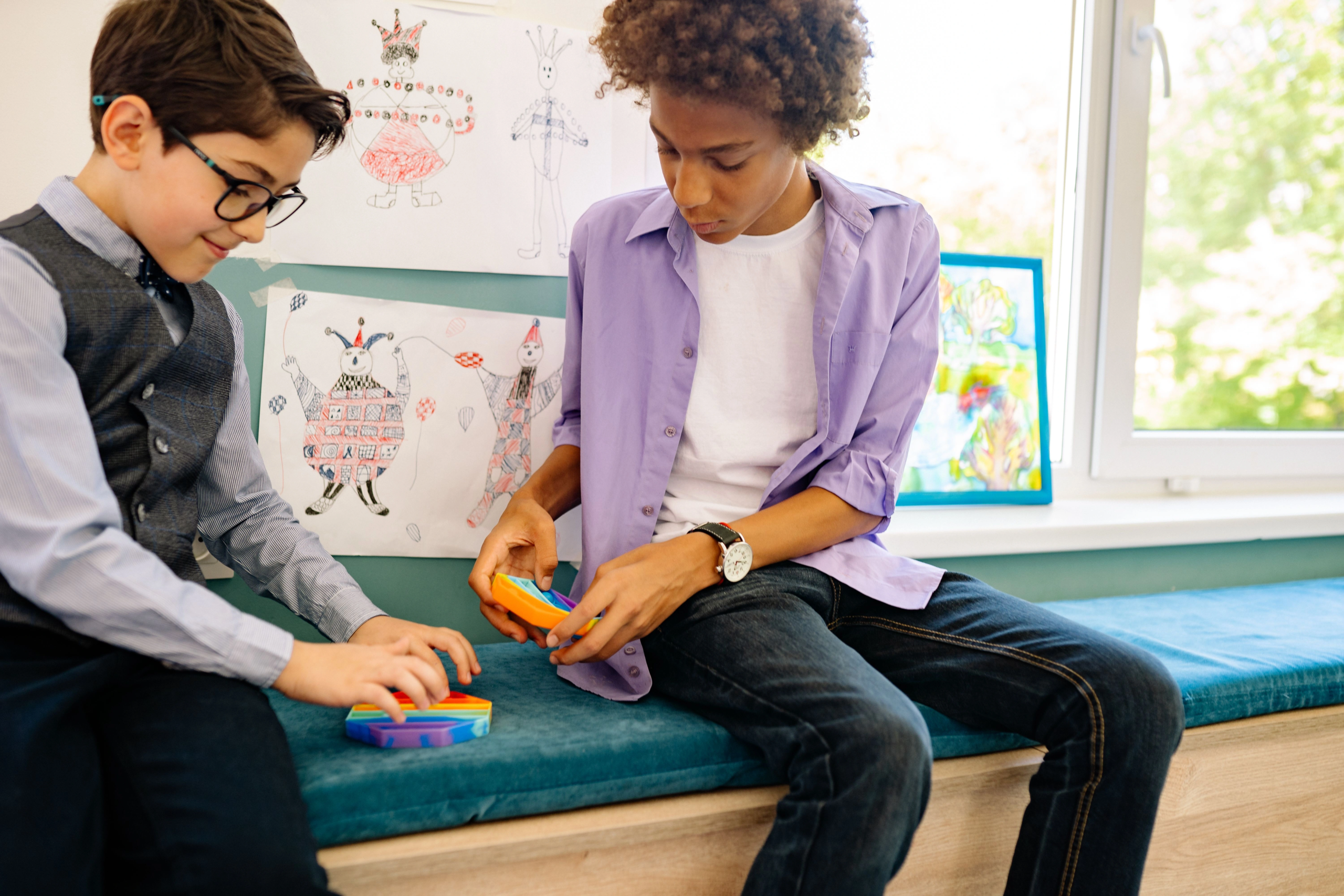
Many students struggle with self-regulation, the ability to monitor and manage their thoughts, emotions, behaviors, and impulses. When a child needs support with self-regulation at school, it can be challenging to identify coping strategies within the structure of a classroom.
For example, a student may prefer to walk their dog to release excess energy, but that strategy is not practical during the school day. Similarly, singing or dancing may help a child regulate at home but could distract classmates in the classroom. Because a classroom is a shared environment, coping strategies must support the individual student without interfering with the learning of others. Identifying appropriate strategies may require creativity and collaboration with the child’s teacher.
One option is to use grounding techniques, which help a person mentally reorient by focusing attention on their immediate surroundings. A common example is the 5-4-3-2-1 technique. The student identifies five things they can see, four things they can touch or feel, three things they can hear, two things they can smell, and one thing they can taste. For instance, a student might notice the trees outside the classroom window, feel a pencil between their fingers, hear the hum of the air conditioning system, smell an air freshener, and taste the ChapStick on their lips. This coping strategy is quiet, discreet, and can be used without disrupting the class.
Another possibility is bringing a comfort item into the classroom. Teachers may not allow stuffed animals or other large objects, but a small photograph may be an appropriate alternative. With the teacher’s permission, a student could keep a picture of their family or a beloved pet on their desk and look at it when they need additional emotional support.
A teacher-approved fidget may also help a student self-regulate. Fidgets that click, flash, or make noise may be distracting, but quieter options can provide sensory input without disrupting instruction. For example, a textured sensory sticker can be placed on a notebook or desk and rubbed with a finger to provide a calming sensation. As with any classroom support, the teacher should approve the strategy and ensure it does not interfere with learning.
Collaborating with a child’s teacher to develop appropriate coping strategies can make self-regulation more manageable throughout the school day. When strategies are thoughtfully chosen to meet both the student’s needs and the classroom’s expectations, they can support the child’s well-being while contributing to a positive learning environment for everyone.
Holly Walther, MSW, LSW, is a Youth First Mental Health Professional at Holy Redeemer Catholic School in Vanderburgh County. Youth First, Inc., is a nonprofit dedicated to strengthening youth and families. Youth First provides over 100 highly trained mental health professionals (primarily master’s level social workers), prevention programs, parent engagement coordinators, and bilingual support personnel to 138 schools across 15 Indiana counties. Over 56,000 youth and families each year are served by Youth First’s school-based social work and community programs that promote mental health, prevent substance misuse, and maximize student success. To learn more about Youth First, visit youthfirstinc.org or call 812-421-8336.