• Español Familias
Youth First
  • About
    • Who We Are
      • Mission, Vision & Values
      • Outcomes & Impact
      • Stories of Change
      • History
      • Team
      • Youth First Mental Health Professionals
      • Board of Directors
      • Leading Sponsors
    • Where We Are
      • Catholic Diocese of Evansville
      • Daviess
      • Dubois
      • Gibson
      • Greene
      • Knox
      • Lawrence
      • Martin
      • Monroe
      • Morgan
      • Orange
      • Perry
      • Posey
      • Spencer
      • Vanderburgh
      • Warrick
  • Programs
    • For Schools & Students
      • Youth First Mental Health Professionals
      • Al’s Pals
      • C.A.S.T.
      • LifeSkills Training
      • Reconnecting Youth
      • Teen Series
      • Tween Series
      • WhyTry
    • For Families & Youth
      • Camp Memories
      • Family First
      • Family Foundations
      • In It to Win It
    • For Communities
      • Talk – They Hear You
      • The Truth Is
  • Resources
    • Resiliency Resources
    • Advice from Our Professionals
    • Other Helpful Resources
  • News
    • Newsletter
    • News Releases
  • Events
    • Calendar of Events/Programs
    • Youth First Warrick County Golf Scramble
    • Youth First Breakfast of Champions
    • Youth First Benefit Auction
  • Careers
  • Contact
  • Support
    • Donate
    • Volunteer
  • Click to open the search input field Click to open the search input field Search
  • Menu Menu
  • Link to Facebook
  • Link to Instagram
  • Link to Youtube
  • Link to LinkedIn

Tag Archive for: Holly Walther

Coping Strategies That are (Almost) Too Cool for School

All Posts, Counties, Youth First Blog

By Holly Walther, MSW, LSW – August 19, 2026 –
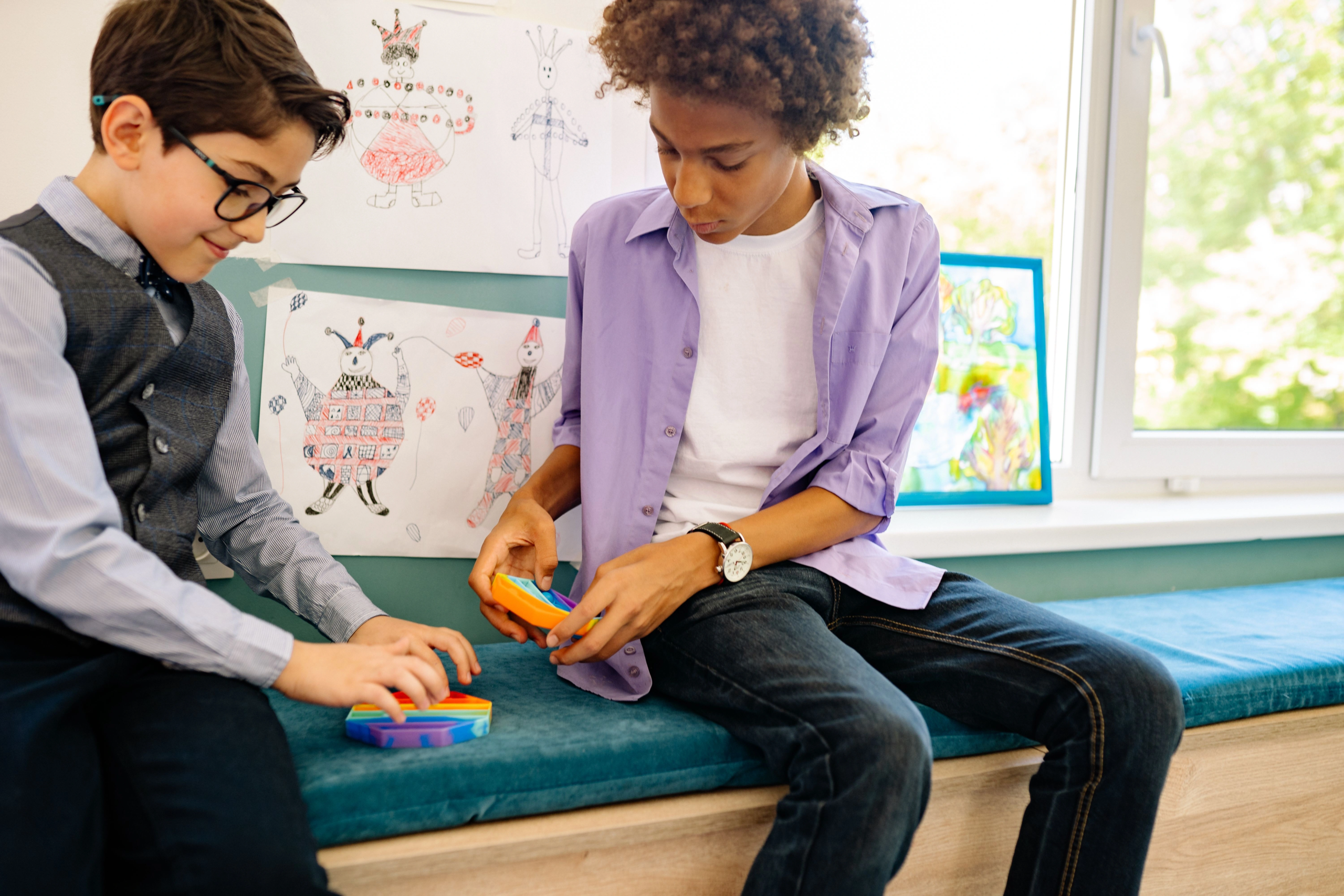
Many students struggle with self-regulation, the ability to monitor and manage their thoughts, emotions, behaviors, and impulses. When a child needs support with self-regulation at school, it can be challenging to identify coping strategies within the structure of a classroom.

For example, a student may prefer to walk their dog to release excess energy, but that strategy is not practical during the school day. Similarly, singing or dancing may help a child regulate at home but could distract classmates in the classroom. Because a classroom is a shared environment, coping strategies must support the individual student without interfering with the learning of others. Identifying appropriate strategies may require creativity and collaboration with the child’s teacher.

One option is to use grounding techniques, which help a person mentally reorient by focusing attention on their immediate surroundings. A common example is the 5-4-3-2-1 technique. The student identifies five things they can see, four things they can touch or feel, three things they can hear, two things they can smell, and one thing they can taste. For instance, a student might notice the trees outside the classroom window, feel a pencil between their fingers, hear the hum of the air conditioning system, smell an air freshener, and taste the ChapStick on their lips. This coping strategy is quiet, discreet, and can be used without disrupting the class.

Another possibility is bringing a comfort item into the classroom. Teachers may not allow stuffed animals or other large objects, but a small photograph may be an appropriate alternative. With the teacher’s permission, a student could keep a picture of their family or a beloved pet on their desk and look at it when they need additional emotional support.

A teacher-approved fidget may also help a student self-regulate. Fidgets that click, flash, or make noise may be distracting, but quieter options can provide sensory input without disrupting instruction. For example, a textured sensory sticker can be placed on a notebook or desk and rubbed with a finger to provide a calming sensation. As with any classroom support, the teacher should approve the strategy and ensure it does not interfere with learning.

Collaborating with a child’s teacher to develop appropriate coping strategies can make self-regulation more manageable throughout the school day. When strategies are thoughtfully chosen to meet both the student’s needs and the classroom’s expectations, they can support the child’s well-being while contributing to a positive learning environment for everyone.

Holly Walther, MSW, LSW, is a Youth First Mental Health Professional at Holy Redeemer Catholic School in Vanderburgh County. Youth First, Inc., is a nonprofit dedicated to strengthening youth and families. Youth First provides over 100 highly trained mental health professionals (primarily master’s level social workers), prevention programs, parent engagement coordinators, and bilingual support personnel to 138 schools across 15 Indiana counties. Over 56,000 youth and families each year are served by Youth First’s school-based social work and community programs that promote mental health, prevent substance misuse, and maximize student success. To learn more about Youth First, visit youthfirstinc.org or call 812-421-8336.

August 19, 2026/by Youth First
https://youthfirstinc.org/wp-content/uploads/2026/08/Boys-with-popper-fidgets-scaled.webp 1707 2560 Youth First https://youthfirstinc.org/wp-content/uploads/2017/06/340x156_YouthFirst_logo_color-300x138.png Youth First2026-08-19 10:36:542026-08-19 10:36:54Coping Strategies That are (Almost) Too Cool for School

Seeking Understanding: The Key to Improving Relationships

All Posts, Counties, Youth First Blog

By Holly Walther, MSW, LSW – September 26, 2024

As the saying goes, “There’s no handbook for parenting.”  It’s a complicated yet fulfilling journey that evokes so many emotions. During times of discipline, we can find ourselves doubting ourselves as we try to strike a balance between justice and compassion. In these uncertain moments, seeking understanding ensures this important equilibrium.

Reacting Vs. Responding

Living in a fast-paced society creates a proneness toward reactivity. But this tendency should not carry over into our closest relationships, especially those within our homes. Your child spills milk on the kitchen floor, and your immediate response might be frustration or annoyance. Your teenager arrives home late, and you might express offense. These reactions originate from our own triggers such as experiences, stress, and exhaustion. But what if instead of reacting in judgment, we seek to understand the situation from outside of our own perspective?

The Importance of Empathy

Empathy is a cornerstone of understanding. In the words of social work researcher Brene Brown, “In order to empathize with someone’s experience, you must be willing to believe them as they see it, and not how you imagine their experience.”  When we empathize with our children, we recognize that their behaviors aren’t always a deliberate challenge to our authority; it’s often a reflection of their inner world and developing mind. Practicing empathy creates a safe environment where our children can express their feelings, fears, and desires.

Changing Unhealthy Patterns

No parents are perfect, not even our own. Perhaps we remember feeling misunderstood, dismissed, or unappreciated. Memories like these shape our parenting styles, sometimes in ways unaware. But seeking understanding breaks this cycle. When we choose to see our children as unique individuals with their own struggles, we break free from generational patterns and cultivate a home where everyone is heard, seen, and understood.

Below are some practical actions for seeking understanding:

  1. Pause and Reflect—Before responding, take a deep breath (or two or three). Openly consider your child’s perspective. What might be influencing their behavior? Is there an underlying need or fear?
  1. Actively Listen—Give your child your undivided attention. Ask open-ended questions such as, “What do you think would make things better?” or “Would you please help me understand what is bothering you?” Show genuine interest in their thoughts and feelings.
  1. Validate Their Emotions—Even if you disagree with their actions, affirm your children’s emotions. Statements like, “I see you’re upset. Let’s talk about it,” help them know that you are trying to understand rather than judge.
  1. Learn Their Love Language—Each child expresses love differently—through words, acts of service, gifts, touch, or quality time. Discover their love language and use it to connect.  Learn more at https://5lovelanguages.com/quizzes/love-language.

As parents, we hold immense power to shape our children’s lives. The rewards of seeking understanding are immeasurable—deeper bonds, a more harmonious home, and the fulfillment of knowing we are shaping compassionate, resilient human beings who will carry forth a beacon of love and empathy into future generations. 

September 26, 2024/by Youth First
https://youthfirstinc.org/wp-content/uploads/2024/09/Mother-and-young-daughter-talking-scaled.jpg 1707 2560 Youth First https://youthfirstinc.org/wp-content/uploads/2017/06/340x156_YouthFirst_logo_color-300x138.png Youth First2024-09-26 10:00:142024-09-26 10:00:16Seeking Understanding: The Key to Improving Relationships
Search Search

Topics

  • Keeping our Kids Safe from Cyberbullying and Online DangersOctober 15, 2026 - 8:52 am
  • Teens and Social Media: Finding Balance Beyond the School DayOctober 7, 2026 - 10:53 am
  • How Can a School Social Worker Help Your Child?September 30, 2026 - 10:48 am
  • The Struggle is RealSeptember 23, 2026 - 10:32 am
  • The Benefits of a Close Sibling RelationshipSeptember 16, 2026 - 10:42 am

Support Youth First

Help protect and heal the hearts of children by supporting Youth First!

Donate

Where to find us

111 SE Third Street, Suite 405
Evansville, IN 47708

Mon–Fri: 8:00–5:00
Sat–Sun: Closed

Get In Touch

812-421-8336

Contact
Copyright © 2026 Youth First, Inc. | Website by Media Mix
  • Website designed by Media Mix Advertising
  • Privacy Policy
Scroll to top Scroll to top Scroll to top