• Español Familias
Youth First
  • About
    • Who We Are
      • Mission, Vision & Values
      • Outcomes & Impact
      • Stories of Change
      • History
      • Team
      • Youth First Mental Health Professionals
      • Board of Directors
      • Leading Sponsors
    • Where We Are
      • Catholic Diocese of Evansville
      • Daviess
      • Dubois
      • Gibson
      • Greene
      • Knox
      • Lawrence
      • Martin
      • Monroe
      • Morgan
      • Orange
      • Perry
      • Posey
      • Spencer
      • Vanderburgh
      • Warrick
  • Programs
    • For Schools & Students
      • Youth First Mental Health Professionals
      • Al’s Pals
      • C.A.S.T.
      • LifeSkills Training
      • Reconnecting Youth
      • Teen Series
      • Tween Series
      • WhyTry
    • For Families & Youth
      • Camp Memories
      • Family First
      • Family Foundations
      • In It to Win It
    • For Communities
      • Talk – They Hear You
      • The Truth Is
  • Resources
    • Resiliency Resources
    • Advice from Our Professionals
    • Other Helpful Resources
  • News
    • Newsletter
    • News Releases
  • Events
    • Calendar of Events/Programs
    • Youth First Warrick County Golf Scramble
    • Youth First Breakfast of Champions
    • Youth First Benefit Auction
  • Careers
  • Contact
  • Support
    • Donate
    • Volunteer
  • Click to open the search input field Click to open the search input field Search
  • Menu Menu
  • Link to Facebook
  • Link to Instagram
  • Link to Youtube
  • Link to LinkedIn

Tag Archive for: Youth First Mental Health Professional

Keeping our Kids Safe from Cyberbullying and Online Dangers

All Posts, Counties, Youth First Blog

By Rebecca Williams, MSW, LSW – October 15, 2026 –

Bullying may begin in the classroom or on the playground, but today’s children and teens can face it anywhere – even in the comfort of their own home through their electronic devices. Bullying generally involves intentional, repeated behavior that causes harm. That harm can be physical, social, emotional, or psychological.

One form of bullying is cyberbullying, which occurs when someone uses digital technology to send, post, or share harmful or hurtful content. Social media, text messages, and online platforms can all become spaces for cyberbullying. Parents and caregivers play an important role in helping children recognize cyberbullying and understand how to respond.

How to Respond to Cyberbullying

Encourage your child to take the following steps if they experience cyberbullying:

  • Don’t respond. Responding with hurtful comments can escalate the situation and cause further harm. Remind your child that retaliating is not the answer.
  • Block the person. Blocking the individual can prevent them from contacting your child or appearing in their social media feed.
  • Save the evidence. Take screenshots of harmful messages, posts, and comments. This documentation can help parents, caregivers, school personnel, and social media platforms address the situation. Encourage your child to report abusive behavior through the platform’s reporting tools.
  • Tell a trusted adult. Encourage your child to talk to a parent, caregiver, teacher, or other trusted adult. Friends can offer emotional support, but adult involvement may be necessary to address the bullying and help keep everyone safe.

Children can also be encouraged to become upstanders by supporting peers who are being bullied and reporting the behavior to a trusted adult.

Protecting Children from Online Predators

Cyberbullying is not the only online risk children may encounter. Online predators may use digital platforms to manipulate, exploit, or harm young people. Some pretend to be children or teenagers, create fake profiles, or claim to share a child’s interests to build trust. Others may use gifts, compliments, or special attention to gain a young person’s trust.

Open conversations about online safety can help children recognize warning signs and feel comfortable asking for help.

Parents and caregivers can reinforce these safety practices:

  • Understand the apps. Review the terms, privacy settings, and age requirements of the digital platforms your child uses.
  • Speak up about inappropriate contact. Make sure your child knows to tell a trusted adult if they receive inappropriate messages, requests, or images.
  • Be cautious with online connections. Encourage children not to accept friend requests or communicate privately with people they do not know. Remind them that online identities can be misleading.
  • Protect personal information. Avoid sharing identifying details, such as a full name, address, phone number, or school, on public platforms.
  • Think before posting. Remind children that digital content can be saved, copied, and shared beyond their control, even if they later delete it.

Digital safety is an ongoing conversation, not a one-time lesson. Parents and caregivers can help protect young people by staying involved, setting appropriate boundaries, and creating an environment where children feel safe discussing their online experiences. By being proactive, adults can empower children to make safer choices, recognize warning signs, and seek help when something doesn’t feel right.

Rebecca Williams, MSW, LSW, is a Youth First Mental Health Professional at Orleans Elementary School in Orange County, Indiana. Youth First, Inc., is a nonprofit dedicated to strengthening youth and families. Youth First provides over 100 highly trained mental health professionals (primarily master’s level social workers), prevention programs, parent engagement coordinators, and bilingual support personnel to 138 schools across 15 Indiana counties. Over 56,000 youth and families each year are served by Youth First’s school-based social work and community programs that promote mental health, prevent substance misuse, and maximize student success. To learn more about Youth First, visit youthfirstinc.org or call 812-421-8336.


 

October 15, 2026/by Youth First
https://youthfirstinc.org/wp-content/uploads/2026/10/AA-boy-on-laptop-scaled.webp 1707 2560 Youth First https://youthfirstinc.org/wp-content/uploads/2017/06/340x156_YouthFirst_logo_color-300x138.png Youth First2026-10-15 08:52:262026-10-15 08:52:26Keeping our Kids Safe from Cyberbullying and Online Dangers

Teens and Social Media: Finding Balance Beyond the School Day

All Posts, Counties, Youth First Blog

By Molly Meriwether , MSW, LSW, MHA – October 7, 2026 –

Social media is a common part of daily life for many students. TikTok, Snapchat, and Instagram are often used to stay connected with friends, share laughs, and pass the time. While Indiana law now limits student cell phone use during school, many students continue using their phones before and after school, in the evenings, and on weekends.

Some students have shared that they stay on their phones late into the night, sometimes as late as 2:00 am. This lack of sleep can significantly impact their mood, focus and ability to function the following day. As a result, social media continues to play a significant role in students’ well-being, friendships, and daily lives, even beyond the school day.

One challenge many students face is comparison. Social media often highlights the best and most carefully curated moments of someone’s life, making it easy for students to believe others are happier, more popular, more confident, or simply doing better than they are. Seeing these images and videos can leave students feeling left out and inadequate. Adults also experience comparison, but students are still developing their sense of identity and learning who they are. This can make the pressure to compare, and the emotions that come with it, feel especially intense and difficult to navigate.

Another challenge is the pressure to be constantly connected. Group chats, notifications, and online trends continue long after the school day ends, leaving some students feeling they need to respond immediately or risk missing out. This can interfere with sleep, increase stress, and make it harder to focus or manage emotions. Social media can also intensify friendship conflicts, as small disagreements can quickly escalate through messages, screenshots, or rumors. For students still learning to navigate friendships, online conflict can feel especially overwhelming.

Despite its challenges, social media can also have positive uses. Students can be creative, share humor, learn new things, and connect with others. Families can join in too – doing TikTok dances or trends together can create connection and support, turning screen time into a shared experience rather than something done alone.

It is also important for students to have time away from screens. Playing outside, joining sports or clubs, drawing, listening to music, reading, cooking with family, or having game nights can help students relax and feel connected. These activities can support emotional balance and give students a break from the pressure that comes with being online.

Teaching students about online safety is just as important as discussing screen time. Remind them to protect personal information, think carefully about what they post, and recognize that not everyone online has good intentions. Knowing how to block or report unsafe content – and when to turn to a trusted adult – can help students navigate the online world more safely.

Encouraging students to speak up when they are concerned about a friend can help ensure they get support when they need it. Adults also play an important role by listening, setting healthy limits, and modeling balanced phone use. Parents and caregivers can start conversations by asking how social media makes their child feel, not just how much time they spend on it. Talk about comparison, online safety, and taking breaks from screens, especially before bedtime. Most importantly, remind children that they can come to you without fear of getting in trouble.

Social media will continue to be part of growing up. With balance, guidance, and strong connections both online and offline, students can learn to use it in healthy and positive ways.

If your student needs additional support or guidance in this area, check to see if your school has a Youth First Mental Health Professional at http://www.youthfirstinc.org/mentalhealthprofessional.

Molly Meriwether, MSW, LSW, MHA, is a Youth First Mental Health Professional at Washington Middle School in Vanderburgh County. Youth First, Inc., is a nonprofit dedicated to strengthening youth and families. Youth First provides over 100 highly trained mental health professionals (primarily master’s level social workers), prevention programs, parent engagement coordinators, and bilingual support personnel to 138 schools across 15 Indiana counties. Over 56,000 youth and families each year are served by Youth First’s school-based social work and community programs that promote mental health, prevent substance misuse, and maximize student success. To learn more about Youth First, visit youthfirstinc.org or call 812-421-8336.

October 7, 2026/by Youth First
https://youthfirstinc.org/wp-content/uploads/2026/10/Teen-boy-taking-a-selfie-scaled.webp 1707 2560 Youth First https://youthfirstinc.org/wp-content/uploads/2017/06/340x156_YouthFirst_logo_color-300x138.png Youth First2026-10-07 10:53:342026-10-07 10:53:34Teens and Social Media: Finding Balance Beyond the School Day

How Can a School Social Worker Help Your Child?

All Posts, Counties, Youth First Blog

By Kacie Shipman, MSW, LCSW – September 30, 2026 –

Have you ever wondered what a school social worker actually does? In this role, I often hear students’ ideas and questions about my job and what my role looks like within the school building.

The short answer? School social workers wear many hats. I often tell students that my job is to help them with anything and everything; or, if I cannot help, connect them with someone who can.

School social workers are mental health professionals in the building who are available to support students throughout the school day. We work individually with students on a wide range of challenges, from difficulty focusing in the classroom to coping with the loss of a beloved pet. We also facilitate groups that provide targeted support to multiple students at once.

One common type of group focuses on building social skills. Social skills groups can be offered at any age or grade level and are designed to meet students where they are developmentally. Students can build confidence, improve communication, strengthen friendships, learn healthy ways to manage emotions, and problem-solve with peers in everyday situations. Other examples of small groups may include a grief group for students who have lost a loved one or a group of students who struggle with self-esteem.

Connecting families with community resources is another important part of a social worker’s role. Supporting students means supporting their families, too. Social workers may connect families with resources for food assistance, health care, housing, school supplies, or other needs. When families have a strong foundation at home, students are better positioned to learn and thrive at school. Social workers also collaborate with teachers, administrators, community organizations, and outside providers to create a network of consistent support for students inside and outside of the classroom.

Confidentiality is an important part of the social work relationship and is guided by professional ethics as well as applicable laws and school policies, including the Health Insurance Portability and Accountability Act (HIPAA) and Family Educational Rights and Privacy Act (FERPA). With appropriate consent and release of information, school social workers can help bridge communication between outside professionals, such as doctors or therapists, and school staff. This collaboration can provide a more complete picture of a student’s needs and help ensure everyone is working toward the same goals.

While school social workers have many responsibilities, relationships remain at the heart of the work. Building trusting relationships with students and families creates opportunities for meaningful support, advocacy, and connection.

Having a professional who knows your child, understands the school environment, and is available to support them can make a meaningful difference, elevating their potential. If you have concerns about your child’s social, emotional or behavioral well-being, consider reaching out to your school’s social worker for a consultation.

To find a list of Youth First Mental Health Professionals and partner schools, visit our website at https://youthfirstinc.org/mentalhealthprofessional/.

Kacie Shipman, MSW, LCSW, is a Youth First Mental Health Professional at Springs Valley Elementary School and Springs Valley Jr/Sr High School in Orange County. Youth First, Inc., is a nonprofit dedicated to strengthening youth and families. Youth First provides over 100 highly trained mental health professionals (primarily master’s level social workers), prevention programs, parent engagement coordinators, and bilingual support personnel to 138 schools across 15 Indiana counties. Over 56,000 youth and families each year are served by Youth First’s school-based social work and community programs that promote mental health, prevent substance misuse, and maximize student success. To learn more about Youth First, visit youthfirstinc.org or call 812-421-8336.


September 30, 2026/by Youth First
https://youthfirstinc.org/wp-content/uploads/2025/03/Male-social-worker-talking-with-boy-scaled.jpg 1707 2560 Youth First https://youthfirstinc.org/wp-content/uploads/2017/06/340x156_YouthFirst_logo_color-300x138.png Youth First2026-09-30 10:48:182026-09-30 10:48:18How Can a School Social Worker Help Your Child?

The Struggle is Real

All Posts, Counties, Youth First Blog

By Diann Moesner, MSW, LCSW – September 23, 2026 –

Whether you are interacting with students as a school professional, a parent, or both, it can feel uncomfortable to watch kids struggle to navigate the world around them. When we see them struggling, it is natural to want to “fix” things for them – to step in and make the challenges go away so that they, and we, do not have to experience the uncomfortable feelings that can come with perceived failure.

This school year’s struggles may take many forms. For some students, it might mean missing the honor roll for the first time in their school career. For others, it could mean not making a team they were certain they would make. It might look like changing peer groups and wondering where they fit in with friends they have known for years. Whatever the struggle looks like, it is important to acknowledge that it is real. Disappointment, change, and uncertainty are a natural and necessary part of learning to navigate the world, and these experiences can help students grow, build resilience, and better understand themselves and others.

The uncomfortable feelings that come with struggle are very real, and it can be difficult – even scary – to watch our young people experience them. But allowing them the space to feel those emotions is an important part of growing up. That does not mean we should let them suffer in silence. In these moments, our most important role may not be that of a superhero, rushing in to save the day or shielding them from every disappointment. Instead, our role is to be present.

Sitting alongside the young person in your life, right there in the middle of all those “yucky” feelings, can be one of the most meaningful things you do. We can help them name and own their feelings, accept an outcome or disappointment, and discover that even difficult moments eventually pass. By staying with them through the discomfort and helping them find their way forward, we give them something far more valuable than a quick rescue: the confidence and resilience to navigate life’s challenges.

In a world filled with carefully curated images of perfect lives, it is easy to believe that anything less than perfection is failure – or that something is wrong with us. But most people don’t make every team they try out for. Most people don’t make the honor roll every semester of their school career. And most people don’t stay best friends with the same people they met in preschool. These experiences are not signs that something has gone wrong; they are a normal part of growing up.

One of the greatest gifts we can give young people is the understanding that it is worthwhile striving to become the best version of yourself while knowing that your worth is never determined by an achievement, grade, team, friendship, or outcome. If things don’t go exactly as hoped or dreamed, they need to know you will always love and value them—and that there is a world full of people, possibilities, and experiences waiting to welcome them for exactly who they are.

There is life after the 10U softball team. There is life after the 5th-grade honor roll celebration. There is life after navigating the changing friendships of middle school. These moments may feel incredibly important right now, but they do not define your child’s worth or determine their future.

Permit yourselves to feel the disappointment. Help your child sit with it, acknowledge it, and recognize that it matters. Then, when they are ready, help them step back and look at the bigger picture. There is so much more life ahead – new opportunities, new relationships, unexpected successes, and countless moments of joy waiting to unfold.

Diann Moesner, MSW, LCSW, is a Youth First Mental Health Professional at Elberfeld Elementary School and Lynnville Elementary School in Warrick County. Youth First, Inc., is a nonprofit dedicated to strengthening youth and families. Youth First provides over 100 highly trained mental health professionals (primarily master’s level social workers), prevention programs, parent engagement coordinators, and bilingual support personnel to 138 schools across 15 Indiana counties. Over 56,000 youth and families each year are served by Youth First’s school-based social work and community programs that promote mental health, prevent substance misuse, and maximize student success. To learn more about Youth First, visit youthfirstinc.org or call 812-421-8336.

 

September 23, 2026/by Youth First
https://youthfirstinc.org/wp-content/uploads/2026/09/Disappointed-sad-boy-scaled.webp 1708 2560 Youth First https://youthfirstinc.org/wp-content/uploads/2017/06/340x156_YouthFirst_logo_color-300x138.png Youth First2026-09-23 10:32:292026-09-23 10:32:29The Struggle is Real

The Benefits of a Close Sibling Relationship

All Posts, Counties, Youth First Blog

By Beth Thomas, MSW, LSW – September 16, 2026 –

Close sibling relationships can have a lifelong impact. They are an important part of our development and can provide valuable knowledge, guidance and support throughout different stages of life.

Of course, no sibling relationship is perfect. Conflict and disagreements are natural, but even these imperfections can shape the closeness that develops over time. A strong relationship with a sibling provides an additional source of emotional support while strengthening the bond between them.

Research has shown that people who have positive and supportive relationships with their siblings often experience a greater sense of well-being, lower levels of depression and sadness, higher life satisfaction, and more positive relationships with others. In contrast, high-conflict sibling relationships have been associated with greater risks of depression and anxiety, as well as more negative interactions with other people, including aggression and hostility.

Sibling relationships also provide important opportunities to learn and develop lifelong skills. From an early age, siblings learn how to communicate with one another, express their thoughts and feelings, and understand different perspectives. As they grow, they learn to negotiate, compromise, and work through disagreements. Although children may not always want to compromise with their siblings, these experiences help them develop skills that remain valuable throughout adulthood.

Siblings also learn how to manage conflict and overcome challenges together. Disagreements and difficult situations can teach them how to resolve problems and find solutions. At the same time, being close to a sibling does not mean that both people are the same. Each sibling develops their own personality, interests, and identity. These relationships can help individuals recognize and appreciate differences, both within their families and in their relationships with others.

Sibling relationships are often among the longest-lasting relationships in a person’s life. However, life can create barriers that affect these connections. Distance, for example, can reduce the physical closeness siblings once shared when one moves away from home. Fortunately, modern technology makes it easier to maintain these relationships. Phone calls, text messages, and video chats such as FaceTime allow siblings to stay connected even when they live far apart.

Sharing childhood experiences, overcoming challenges and growing together can create a lasting bond. Parents can also encourage positive sibling relationships from an early age by helping children communicate, cooperate, and support one another. Even during childhood, sibling relationships begin to shape who we become and can continue to influence our lives for years to come. However, it is never too late to build or strengthen a relationship with a sibling.

Beth Thomas, MSW, LSW, is a Youth First Mental Health Professional at Hebron Elementary School in Vanderburgh County. Youth First, Inc., is a nonprofit dedicated to strengthening youth and families. Youth First provides over 100 highly trained mental health professionals (primarily master’s level social workers), prevention programs, parent engagement coordinators, and bilingual support personnel to 138 schools across 15 Indiana counties. Over 56,000 youth and families each year are served by Youth First’s school-based social work and community programs that promote mental health, prevent substance misuse, and maximize student success. To learn more about Youth First, visit youthfirstinc.org or call 812-421-8336.

Photo credit: Ian Taylor – https://www.iantaylor.ca/kids

September 16, 2026/by Youth First
https://youthfirstinc.org/wp-content/uploads/2026/09/Two-sisters-scaled.webp 1707 2560 Youth First https://youthfirstinc.org/wp-content/uploads/2017/06/340x156_YouthFirst_logo_color-300x138.png Youth First2026-09-16 10:42:222026-10-06 08:23:03The Benefits of a Close Sibling Relationship

Caring for Your Own Mental Health is Part of Caring for Your Child

All Posts, Counties, Youth First Blog

By Jordyn Bryant, MSW, LCSW – September 9, 2026 –

While parenting is deeply meaningful and rewarding, we cannot ignore that it is also emotionally demanding. Many parents focus so fully on their child’s needs that their own well-being gradually moves to the background. Between managing daily responsibilities, responding to a child’s emotions, balancing work and family life, and trying to meet everyone’s expectations, parents may have little time or energy left for themselves.

Over time, stress, exhaustion, and overwhelming feelings can build quietly. Paying attention to your own mental health is not a luxury or a sign of weakness. It is an important part of supporting your child and creating a healthy family environment.

Parents are expected to remain calm, patient, and emotionally available at all times. In reality, parents are experiencing all that life throws at them too, including stress, frustration, worry, sadness, and fatigue. Acknowledging these feelings does not mean failing as a parent. It means being honest with yourself and recognizing that you are human. Permitting yourself to experience difficult emotions can make it easier to respond to them in healthy ways, rather than allowing them to build up until they become overwhelming.

When parents allow space for their own emotions, they also send an important message to children: feelings are normal, manageable, and safe to talk about. Instead of teaching children that difficult emotions should be hidden or ignored, parents can model healthy ways of recognizing, expressing, and managing those emotions. Saying, “I’m feeling overwhelmed, so I need a few quiet minutes,” for example, can demonstrate that taking a break is a responsible way to cope with stress.

Children learn about emotions by watching the adults around them. Research consistently shows that a caregiver’s emotional well-being plays an important role in a child’s development. When parents take care of their mental health, children can benefit in meaningful ways. They are more likely to experience emotional safety, learn healthy coping skills, develop stronger relationships, and build resilience over time. A parent who demonstrates self-compassion and emotional awareness gives a child valuable tools they can carry into adolescence and adulthood.

Many parents feel guilty about prioritizing themselves. There is often an unspoken belief that good parenting requires constant self-sacrifice. While caring for children certainly requires effort, flexibility, and putting their needs first at times, it does not require parents to ignore their own needs completely. In fact, consistently neglecting your own well-being can make it more difficult to be the patient and present parent you want to be. Small acts of self-care, such as taking a pause, getting enough rest when possible, spending a few quiet moments alone, asking for support, or setting healthy boundaries, can make a meaningful difference.

You don’t have to have all the answers to be a good parent, and you don’t have to feel calm every moment or handle every situation perfectly. What matters is recognizing when you need support and being willing to care for yourself as well as your child. Taking care of your mental health is not separate from caring for your child; rather, it is part of it. By caring for yourself, you are modeling compassion, balance, and emotional health – traits your child can learn and carry with them as they grow.

Jordyn Bryant, MSW, LCSW, is a Youth First Mental Health Professional at Stringtown Elementary School in Vanderburgh County. Youth First, Inc., is a nonprofit dedicated to strengthening youth and families. Youth First provides over 100 highly trained mental health professionals (primarily master’s level social workers), prevention programs, parent engagement coordinators, and bilingual support personnel to 138 schools across 15 Indiana counties. Over 56,000 youth and families each year are served by Youth First’s school-based social work and community programs that promote mental health, prevent substance misuse, and maximize student success. To learn more about Youth First, visit youthfirstinc.org or call 812-421-8336.

September 9, 2026/by Youth First
https://youthfirstinc.org/wp-content/uploads/2026/09/Parent-doing-yoga-with-children-scaled.webp 1440 2560 Youth First https://youthfirstinc.org/wp-content/uploads/2017/06/340x156_YouthFirst_logo_color-300x138.png Youth First2026-09-09 16:04:562026-09-09 16:04:56Caring for Your Own Mental Health is Part of Caring for Your Child

How Social Isolation Impacts Emotional Regulation in Young Children

All Posts, Counties, Youth First Blog

By Jordan Evans, MSW, LSW – September 2, 2026 –

Emotional regulation is a child’s ability to understand, express, and manage their feelings in healthy ways. This skill begins developing early in life and continues to grow throughout childhood. Children do not learn emotional regulation on their own. Instead, they develop it through everyday interactions with parents, caregivers, peers, and their surrounding environment.

From a very young age, children look to adults to learn how emotions work. When parents comfort their child, name emotions, or help them calm down after they are upset, they are teaching important emotional skills. For example, when a parent acknowledges a child’s frustration and offers reassurance, the child begins to learn how to cope with strong feelings. Over time, these repeated moments help children manage emotions more independently.

Some children experience social isolation without parents realizing it. This can happen when children spend long periods using screens, are sent to their rooms for extended amounts of time or have limited opportunities to play with other children. When face-to-face interaction is reduced, children miss valuable opportunities to practice social and emotional skills in real-world situations. These missed experiences can affect how children learn to regulate their emotions.

Spending time with other children plays a key role in emotional development. Through play and occasional conflict, children experience emotions such as excitement, anger, jealousy, and disappointment. Learning to share, take turns, and work through disagreements helps children build patience, flexibility, and self-control. When children do not have regular peer interaction, they may struggle more with frustration and emotional reactions.

Social isolation can also make negative emotions feel stronger. Children who spend a lot of time alone may feel lonely, anxious, or bored, even if they cannot explain these feelings. Without regular interaction, children may have difficulty understanding their feelings and how to respond appropriately. This can lead to frequent tantrums, withdrawal from others, or trouble calming down after small challenges.

Language development is closely connected to emotional regulation. Talking with adults and other children helps children learn the words they need to describe their emotions. When children have limited social interaction, they may have fewer opportunities to hear and practice emotional language. As a result, children may become frustrated when they cannot express how they feel, leading to emotional outbursts.

The good news is that parents can make a meaningful difference. Warm and responsive relationships help protect children from the negative effects of social isolation. Simple daily actions such as maintaining routines, talking openly about feelings, offering comfort during difficult moments, and spending quality time together all support emotional growth.

Creating opportunities for social play, such as playdates, family activities, or group programs, can also help children practice emotional and social skills.

Here are some easy ways to engage with your child:

  • Eat dinner as a family without screens at the table
  • Read together
  • Play a board or card game
  • Play outside
  • Ask your child about their day
  • Ask your child about their future using open-ended questions
  • Be emotionally available to your child by limiting digital distractions
  • Limit screen time for all household members

By staying engaged, present, and intentional, parents can help their children build strong emotional regulation skills that support healthy relationships, confidence, and emotional well-being throughout life.

Jordan Evans, MSW, LSW, is a Youth First Mental Health Professional at Daniel Wertz Elementary School in Vanderburgh County. Youth First, Inc., is a nonprofit dedicated to strengthening youth and families. Youth First provides over 100 highly trained mental health professionals (primarily master’s level social workers), prevention programs, parent engagement coordinators, and bilingual support personnel to 138 schools across 15 Indiana counties. Over 56,000 youth and families each year are served by Youth First’s school-based social work and community programs that promote mental health, prevent substance misuse, and maximize student success. To learn more about Youth First, visit youthfirstinc.org or call 812-421-8336.
September 2, 2026/by Youth First
https://youthfirstinc.org/wp-content/uploads/2026/09/Mad-child-scaled.webp 2560 1707 Youth First https://youthfirstinc.org/wp-content/uploads/2017/06/340x156_YouthFirst_logo_color-300x138.png Youth First2026-09-02 15:10:332026-09-02 15:10:33How Social Isolation Impacts Emotional Regulation in Young Children

Managing Stress in the Elementary Classroom

All Posts, Counties, Youth First Blog

By Kelly Leavitt, MSW, LSW – August 26, 2026 –

Have you ever wondered how stress affects an entire school classroom? What steps can we take to manage stress before it becomes overwhelming? And how can educators recognize stress in students and help them cope?

Students today are influenced by their peers in both positive and negative ways. Because elementary-aged children are still developing the skills needed to identify and manage their emotions, creating a supportive school environment is essential. When stress becomes overwhelming, it can affect a student’s academic performance, relationships, comfort, and overall well-being.

Children may experience stress for many reasons, including academic expectations, extracurricular activities, learning challenges, peer conflicts, and difficulties at home. At this age, many students have difficulty identifying the source of their stress, making it especially important for adults to recognize changes in their behavior and emotional well-being.

Educators can experience significant stress as well. High levels of workplace stress may contribute to burnout, decreased job satisfaction, and staff turnover. When teachers are overwhelmed, they may have less emotional energy to provide the support, stability, and structure students need. Supporting educators is therefore an important part of creating a healthy classroom environment.

Recognizing signs of stress is the first step toward helping students manage it. Warning signs may include irritability or agitation, extreme mood changes, difficulty concentrating or making decisions, withdrawal from friends or family, changes in eating or sleeping habits, declining school performance, poor self-esteem, impulsive behavior, or persistent feelings of sadness or hopelessness. When these changes are noticeable or ongoing, trusted adults need to respond with patience and support.

There are several ways schools can help students manage stress. Physical activity can provide an opportunity to release tension and improve mood. Incorporating movement breaks, outdoor activities, or physical education into the school day can support students’ emotional well-being. Mindfulness activities, such as deep breathing, guided meditation, or brief moments of quiet reflection, can also help students recognize and regulate their emotions.

Creating strong social connections is equally important. A classroom where students feel safe, supported, and connected to their teachers and peers can provide a valuable buffer against stress. Encouraging positive relationships, teaching coping skills, and creating opportunities for students to communicate their feelings can help them develop healthy ways to manage challenges.

Teachers also need opportunities to manage their own stress. Self-care, professional development, peer support, and access to appropriate wellness resources can help educators maintain their well-being. A supportive network of colleagues can provide a space to share challenges, exchange ideas, and learn effective coping strategies.

By prioritizing stress management for both students and educators, schools can create environments that promote emotional well-being and academic success. When stress continues despite consistent support and coping strategies, seeking assistance from a qualified mental health professional may provide additional resources and support.

Kelly Leavitt, MSW, LSW, is a Youth First Mental Health Professional at Highland Elementary School in Vanderburgh County. Youth First, Inc., is a nonprofit dedicated to strengthening youth and families. Youth First provides over 100 highly trained mental health professionals (primarily master’s level social workers), prevention programs, parent engagement coordinators, and bilingual support personnel to 138 schools across 15 Indiana counties. Over 56,000 youth and families each year are served by Youth First’s school-based social work and community programs that promote mental health, prevent substance misuse, and maximize student success. To learn more about Youth First, visit youthfirstinc.org or call 812-421-8336.

August 26, 2026/by Youth First
https://youthfirstinc.org/wp-content/uploads/2026/09/Stressed-elementary-student-scaled.webp 1707 2560 Youth First https://youthfirstinc.org/wp-content/uploads/2017/06/340x156_YouthFirst_logo_color-300x138.png Youth First2026-08-26 14:48:472026-09-02 14:58:41Managing Stress in the Elementary Classroom

Coping Strategies That are (Almost) Too Cool for School

All Posts, Counties, Youth First Blog

By Holly Walther, MSW, LSW – August 19, 2026 –

Many students struggle with self-regulation, the ability to monitor and manage their thoughts, emotions, behaviors, and impulses. When a child needs support with self-regulation at school, it can be challenging to identify coping strategies within the structure of a classroom.

For example, a student may prefer to walk their dog to release excess energy, but that strategy is not practical during the school day. Similarly, singing or dancing may help a child regulate at home but could distract classmates in the classroom. Because a classroom is a shared environment, coping strategies must support the individual student without interfering with the learning of others. Identifying appropriate strategies may require creativity and collaboration with the child’s teacher.

One option is to use grounding techniques, which help a person mentally reorient by focusing attention on their immediate surroundings. A common example is the 5-4-3-2-1 technique. The student identifies five things they can see, four things they can touch or feel, three things they can hear, two things they can smell, and one thing they can taste. For instance, a student might notice the trees outside the classroom window, feel a pencil between their fingers, hear the hum of the air conditioning system, smell an air freshener, and taste the ChapStick on their lips. This coping strategy is quiet, discreet, and can be used without disrupting the class.

Another possibility is bringing a comfort item into the classroom. Teachers may not allow stuffed animals or other large objects, but a small photograph may be an appropriate alternative. With the teacher’s permission, a student could keep a picture of their family or a beloved pet on their desk and look at it when they need additional emotional support.

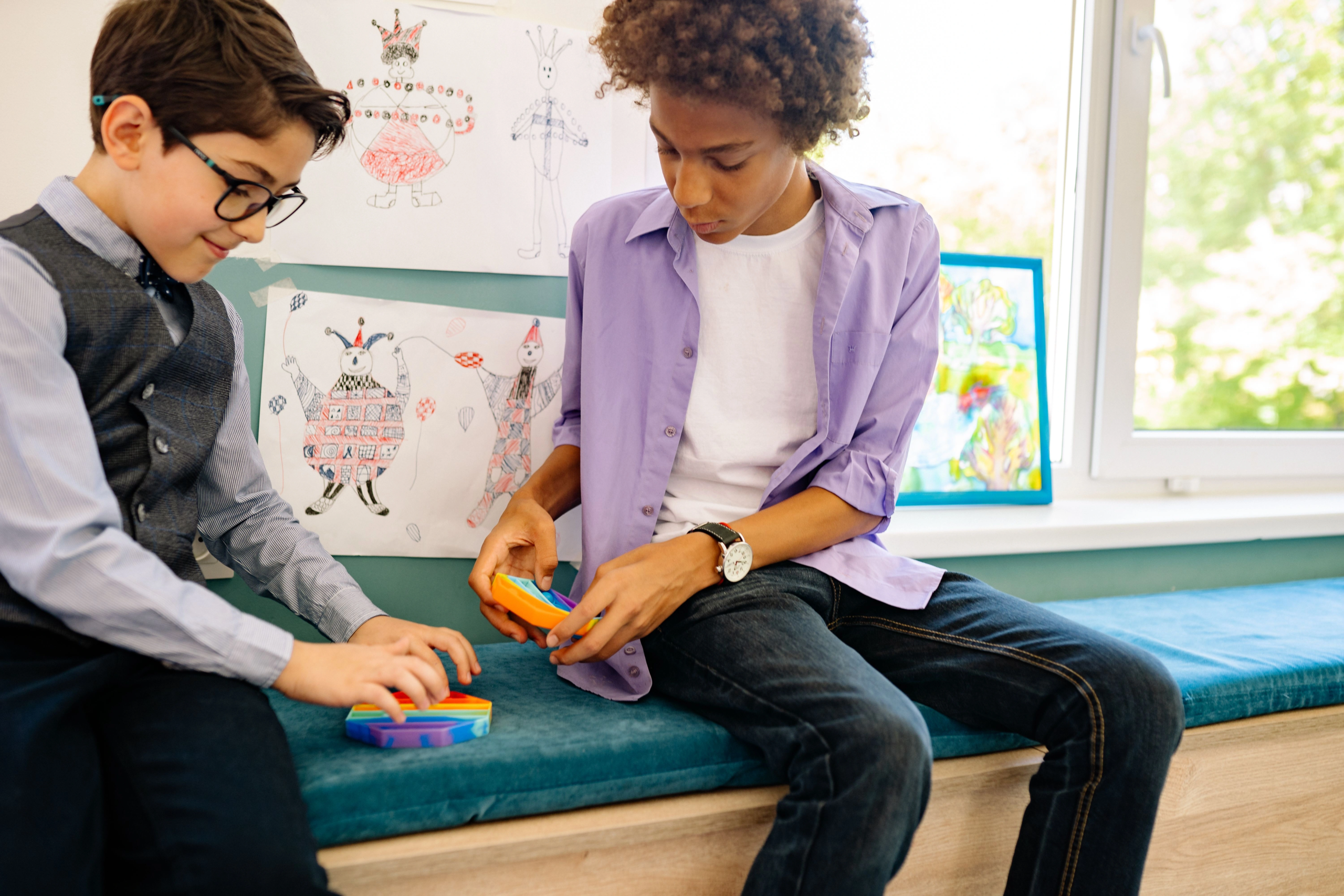
A teacher-approved fidget may also help a student self-regulate. Fidgets that click, flash, or make noise may be distracting, but quieter options can provide sensory input without disrupting instruction. For example, a textured sensory sticker can be placed on a notebook or desk and rubbed with a finger to provide a calming sensation. As with any classroom support, the teacher should approve the strategy and ensure it does not interfere with learning.

Collaborating with a child’s teacher to develop appropriate coping strategies can make self-regulation more manageable throughout the school day. When strategies are thoughtfully chosen to meet both the student’s needs and the classroom’s expectations, they can support the child’s well-being while contributing to a positive learning environment for everyone.

Holly Walther, MSW, LSW, is a Youth First Mental Health Professional at Holy Redeemer Catholic School in Vanderburgh County. Youth First, Inc., is a nonprofit dedicated to strengthening youth and families. Youth First provides over 100 highly trained mental health professionals (primarily master’s level social workers), prevention programs, parent engagement coordinators, and bilingual support personnel to 138 schools across 15 Indiana counties. Over 56,000 youth and families each year are served by Youth First’s school-based social work and community programs that promote mental health, prevent substance misuse, and maximize student success. To learn more about Youth First, visit youthfirstinc.org or call 812-421-8336.

August 19, 2026/by Youth First
https://youthfirstinc.org/wp-content/uploads/2026/08/Boys-with-popper-fidgets-scaled.webp 1707 2560 Youth First https://youthfirstinc.org/wp-content/uploads/2017/06/340x156_YouthFirst_logo_color-300x138.png Youth First2026-08-19 10:36:542026-08-19 10:36:54Coping Strategies That are (Almost) Too Cool for School

Helping Children Build Motivation: Small Steps Toward Success

All Posts, Counties, Youth First Blog

By Hannah Boutkan, MSW, LSW – August 13, 2026 –

Children are born with an innate desire to learn, grow, and explore the world around them. As they get older, however, environmental, social, mental, and emotional factors can affect that motivation, especially when it comes to school and everyday responsibilities. While adults cannot force a child to be motivated, they can create environments that encourage curiosity, confidence, and a willingness to keep trying.

The Harvard Center on the Developing Child offers several strategies to help build motivation, beginning in infancy.

One of the simplest ways to build connection and encourage curiosity is to follow a child’s lead. Take an interest in what captures their attention and encourage them to explore. When children feel supported in their play and discoveries, they learn that their interests and ideas matter. This early curiosity can become the foundation for a lifelong desire to learn.

Another valuable strategy is to encourage unstructured play. When children have opportunities to play without every activity being directed by an adult, they can develop imagination, creativity, problem-solving, and social skills. These skills become important later when children encounter challenging or less-interesting tasks. The ability to think creatively, solve problems, and interact with others can help them remain engaged when things become difficult.

It is also important to make sure expectations are age-appropriate. Think of the Goldilocks principle: a task should not be too hard or too easy — it should be just right. If a child believes a task is impossible, they may quickly become frustrated and give up. On the other hand, a task that is too easy may not provide enough challenge to hold their attention. The right level of challenge allows children to see a task as achievable while still giving them a reason to stay engaged.

Goal setting can also strengthen motivation. Goals give children a sense of purpose and help them understand why their daily responsibilities matter. One approach commonly used in social work is SMART goals: goals that are specific, measurable, achievable, realistic, and time-bound. Most importantly, goals should be meaningful to the child. When children have a voice in what they want to accomplish, they are more likely to see the goal as worthwhile and stay motivated to reach it.

Finally, adults should praise the process, not just the outcome. Recognize the small steps a child takes toward success: starting a difficult task, asking for help, practicing a new skill, or trying again after making a mistake. Focusing on effort and progress helps children understand that setbacks do not mean failure. Instead, mistakes become opportunities to learn and try again.

Motivation does not develop overnight. It grows through positive relationships, meaningful challenges, opportunities to explore, and encouragement along the way. By following children’s interests, encouraging play, setting appropriate goals, and celebrating progress, parents and teachers can create supportive environments that help children develop the confidence and motivation they need to succeed in the classroom and beyond.

Hannah Boutkan, MSW, LSW, is a Youth First Mental Health Professional at Holy Rosary Catholic School in Vanderburgh County. Youth First, Inc., is a nonprofit dedicated to strengthening youth and families. Youth First provides over 100 highly trained mental health professionals (primarily master’s level social workers), prevention programs, parent engagement coordinators, and bilingual support personnel to 138 schools across 15 Indiana counties. Over 56,000 youth and families each year are served by Youth First’s school-based social work and community programs that promote mental health, prevent substance misuse, and maximize student success. To learn more about Youth First, visit youthfirstinc.org or call 812-421-8336.

August 13, 2026/by Youth First
https://youthfirstinc.org/wp-content/uploads/2026/08/Adult-male-motivating-boy-scaled.webp 1707 2560 Youth First https://youthfirstinc.org/wp-content/uploads/2017/06/340x156_YouthFirst_logo_color-300x138.png Youth First2026-08-13 11:21:202026-08-13 11:21:20Helping Children Build Motivation: Small Steps Toward Success
Page 1 of 6123›»
Search Search

Topics

  • Keeping our Kids Safe from Cyberbullying and Online DangersOctober 15, 2026 - 8:52 am
  • Teens and Social Media: Finding Balance Beyond the School DayOctober 7, 2026 - 10:53 am
  • How Can a School Social Worker Help Your Child?September 30, 2026 - 10:48 am
  • The Struggle is RealSeptember 23, 2026 - 10:32 am
  • The Benefits of a Close Sibling RelationshipSeptember 16, 2026 - 10:42 am

Support Youth First

Help protect and heal the hearts of children by supporting Youth First!

Donate

Where to find us

111 SE Third Street, Suite 405
Evansville, IN 47708

Mon–Fri: 8:00–5:00
Sat–Sun: Closed

Get In Touch

812-421-8336

Contact
Copyright © 2026 Youth First, Inc. | Website by Media Mix
  • Website designed by Media Mix Advertising
  • Privacy Policy
Scroll to top Scroll to top Scroll to top